
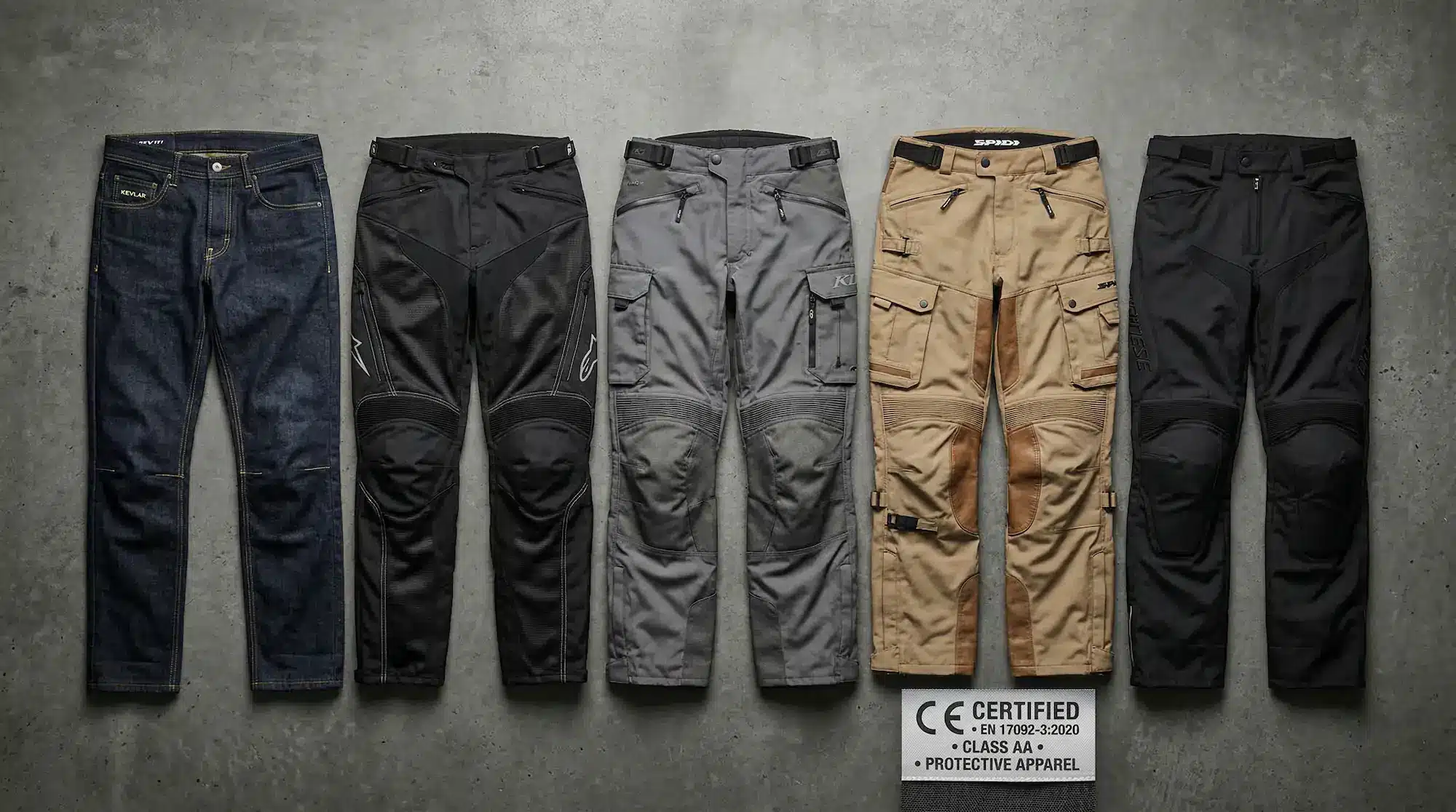
Most riders know they need dedicated leg protection, but navigating the market can be overwhelming. You are faced with Kevlar jeans, advanced textiles, perforated leather, and summer mesh. To complicate things further, you have to decode European safety acronyms like “CE-AA” and “EN 17092.” The result? Many guys end up buying based purely on price or aesthetic, ultimately ending up with inadequate protection for their specific riding style or a pair of pants that is too hot, too cold, or too restrictive to actually wear.
Finding the best motorcycle riding pants for men means matching the right materials and safety certifications to your daily reality. Whether you are commuting to an office, carving canyons on a sportbike, or tackling a cross-country adventure, your gear needs to perform. We researched and compared the top options across the market, organizing them by riding style rather than just price. Below, we break down exactly what the CE safety ratings mean, followed by a detailed comparison table of our top five picks for 2026.
Table of Contents
- CE EN 17092 — The Motorcycle Pants Certification Standard
- Kevlar Jeans vs. Textile vs. Leather — Which Type Do You Need?
- Best Motorcycle Riding Pants for Men — 5 Picks
- How to Make Sure Your Armor Fits Correctly
- Frequently Asked Questions
CE EN 17092 — The Motorcycle Pants Certification Standard
Before you look at a single pair of motorcycle pants for men, you need to understand the CE EN 17092 standard. This is the European certification standard that classifies motorcycle garments based on their abrasion resistance, seam strength, and tear resistance. While this standard is not legally required in the United States, it is the de facto global benchmark for independent quality verification.
The standard grades the entire garment — the fabric and construction — which is separate from the armor pads inside it. Here is the scale that matters:
| Class | Abbreviation | What It Means | Best For |
|---|---|---|---|
| Class A | CE-A | Minimum level — basic impact and abrasion protection. | Casual urban use, low-speed riding, lightweight summer gear. |
| Class AA | CE-AA | Intermediate level — greater abrasion and seam resistance. | Everyday street riding, commuting, touring. |
| Class AAA | CE-AAA | Maximum level — highest resistance to tearing and sliding. | Sport riding, high speeds, track days, maximum street protection. |
Armor Ratings: The CE rating of the garment is independent of the impact armor inside it. CE armor comes in Level 1 (minimum required impact absorption) and Level 2 (higher impact absorption). For general street riding, a CE-AA rated pant with Level 1 armor is a highly respectable baseline. A CE-AA garment with Level 2 armor in the knees and hips is objectively better for absorbing blunt force during a crash.
Kevlar Jeans vs. Textile vs. Leather — Which Type Do You Need?
Once you understand the safety ratings, you have to choose your material. The “best” pant is simply the one that fits your climate and destination.
1. Kevlar Jeans / Riding Jeans
These look practically identical to regular streetwear. The exterior is usually a heavy 12–16 oz denim or Cordura denim blend. They come in two styles: lined (standard denim with an inner layer of Kevlar or aramid fiber at the knees, hips, and seat) and single-layer (abrasion-resistant fibers woven directly into the denim). Single-layer jeans run cooler and lighter. Modern textile advancements mean premium single-layer riding jeans can now achieve CE-AAA ratings. They are ideal for commuters and casual riders who do not want to change clothes when they reach their destination.
2. Textile Motorcycle Pants
Built for pure utility. The main chassis is usually constructed from Cordura (500D or 840D — a higher denier means thicker, tougher material), Superfabric, or mesh for summer riding. Textile pants are incredibly versatile. Many feature removable waterproof membranes (like GORE-TEX) and thermal liners, making them true four-season gear. They are the go-to choice for ADV riders, tourers, and all-weather commuters.
3. Leather Riding Pants
Leather remains the undisputed leader in abrasion resistance relative to its thickness. Natural cowhide or kangaroo leather survives high-speed slides better than almost any textile. However, leather is heavy, breathes poorly in high heat, and is not waterproof. It is strictly ideal for sportbikes, café racers, and aggressive canyon carving or track days.
| Type | Look / Style | Abrasion Resistance | Waterproof? | Ideal Rider | Typical Price |
|---|---|---|---|---|---|
| Kevlar Jeans | Casual / Street | Medium to High | No | Commuter, Urban, Cruiser | $150–$350 |
| Textile / Mesh | Technical / Utility | High | Yes (membrane models) | ADV, Touring, All-Weather | $150–$600+ |
| Leather | Sport / Aggressive | Maximum | No | Sportbike, Track, Canyon | $200–$800+ |
Best Motorcycle Riding Pants for Men — 5 Picks by Riding Style
Researched and compared across industry sources including RevZilla and WebBikeWorld, with a strict focus on CE certification, material quality, and US availability. Here are the five best options for 2026, organized by riding style.
| Pick | Best For | Outer Material | CE Rating | Waterproof | Est. Price |
|---|---|---|---|---|---|
| REV’IT! Moto 2 TF Jeans | Casual / Everyday | 15 oz Cordura Denim | CE-AA | No | ~$200 |
| REV’IT! Airwave 4 | Summer / Hot Weather | Textile + Mesh Panels | CE-AA | No | ~$200 |
| Alpinestars Bogota Pro Drystar | All-Weather / Street | Textile + Drystar Membrane | CE-AA | Yes | ~$230 |
| Klim Badlands Pro | ADV / Touring | GORE-TEX 3L + Cordura | CE-AA | Yes | ~$550 |
| ILM CE Armored Pants | Budget Entry | Basic Textile | Unrated (Level 1 Armor) | No | ~$90 |
Best for Everyday / Casual Riding — REV’IT! Moto 2 TF Jeans
For the rider who wants to hop off the bike and walk right into a restaurant or the office without looking like a Power Ranger, the REV’IT! Moto 2 TF Jeans are the premier choice. The “TF” stands for Tapered Fit — room through the thighs for saddle comfort, tapering below the knee to avoid flapping at highway speeds.
Constructed from a heavy 15 oz Cordura denim, they carry a CE-AA safety rating and come equipped with Seesmart CE Level 1 armor in the knees and hips. A key feature is the two-position adjustable knee armor pockets, allowing precise fitment for different rider heights.
The Gap: No waterproof lining. If you get caught in a downpour, you are getting soaked.
Best for Summer / Hot Weather — REV’IT! Airwave 4 Pants
Riding in 95-degree heat can tempt you to leave your gear at home. The REV’IT! Airwave 4 is the antidote. The chassis uses abrasion-resistant textiles in critical slide zones, while massive mesh paneling covers the front and back of the legs to flow air directly to your skin. CE-AA certified with Level 1 knee armor and hip protector-ready pockets. Stretch panels at the knees maintain comfort on long rides.
The Gap: The tradeoff for maximum airflow is zero rain or cold protection. You will feel every degree of temperature drop.
Best All-Weather Street Pants — Alpinestars Bogota Pro Drystar
If you commute from early spring through late fall, you need a pant that adapts to changing forecasts. The Alpinestars Bogota Pro Drystar combines Alpinestars’ proprietary Drystar waterproof membrane with a removable thermal liner. Run them fully insulated for cold mornings, remove the liner for rainy commutes, or open the thigh ventilation zippers when the sun comes out. CE-AA certified with Level 1 knee armor and hip upgrade pockets.
The Gap: Bulkier than riding jeans. In peak summer heat, they run significantly hotter than a dedicated mesh pant even with liners removed and vents open.
Best for ADV / Touring — Klim Badlands Pro
The gold standard for serious adventure and long-distance touring. If you are logging 10,000+ miles a year across multiple states and unpredictable mountain weather, this is your pant. Built with a GORE-TEX 3-Layer Pro shell for guaranteed waterproofing without a separate rain liner. High-wear zones are reinforced with Superfabric and Cordura for CE-AA certification. Features custom D3O Aero Pro CE Level 2 armor throughout, adjustable ventilation, and six-plus functional cargo pockets.
The Gap: The price. At well over $500, it is overkill for a 15-minute urban commute — but worth every penny if you live on the highway. For context on what serious touring mileage does to a bike overall, our guide on what is a lot of miles for a motorcycle breaks down wear expectations by bike type.
Best Budget Option — ILM CE Armored Motorcycle Pants
Motorcycle gear is notoriously expensive, but a tight budget should not mean riding in khakis. The ILM CE Armored Riding Pants serve as an entry point for riders who will not spend $200+ but still want dedicated motorcycle utility and armor. These feature a basic durable textile outer shell and ship with CE Level 1 knee armor and hip protector pockets. Articulated knees improve riding comfort. Readily available on Amazon with fast shipping, making them highly accessible for new riders.
The Gap: The outer shell does not carry a verified CE-AA abrasion rating. They are a reasonable choice for low-to-medium speed casual riding, but not ideal for aggressive highway use where garment integrity in a sustained slide matters most.
How to Make Sure Your Armor Fits Correctly
The single most common mistake riders make when buying pants is ordering their standard waist size and ignoring where the armor physically sits.
Your knee armor must sit directly over your kneecap when you are seated on the motorcycle in your riding position. When standing and walking around, the armor will naturally drop lower, often resting on your upper shin. This is normal and expected. If the armor is perfectly centered on your knee while standing, it will ride up your thigh as soon as you bend your legs on the pegs — leaving your knee completely unprotected in a crash.
Pay close attention to waist and thigh measurements, as motorcycle pants fit differently than standard fashion jeans. Always mount your bike and physically check the armor placement before removing the tags. If your pants offer adjustable knee pockets, configure them before your first ride.
Frequently Asked Questions
Are motorcycle riding pants worth it?
Yes. Lower extremity injuries are among the most frequently reported in non-fatal motorcycle crashes per NHTSA crash data. Standard fashion denim provides almost zero abrasion resistance — independent abrasion testing shows standard denim fails in under one second when sliding on asphalt at 30 mph. CE-AA rated motorcycle pants are engineered to withstand standardized abrasion tests, providing significantly more slide time and drastically reducing road rash severity.
What does CE-AA mean on motorcycle pants?
CE-AA means the pant has been certified under the European EN 17092 standard at Class AA — the intermediate level out of three (A, AA, AAA). A CE-AA pant has passed rigorous standardized tests for abrasion resistance, seam burst strength, and overall fit. It is the recommended baseline for general street riding and highway commuting. CE-AAA is the highest rating, typically found on heavy track leathers and premium sport pants.
Can I wear regular jeans on a motorcycle?
Technically yes, but standard denim offers minimal protection in a fall. A slide on asphalt at moderate city speeds will eat through regular jeans almost instantly. Motorcycle riding jeans made with Kevlar, aramid linings, or Cordura denim offer substantially higher abrasion resistance while maintaining the look of regular streetwear. If you absolutely insist on regular pants, wearing standalone CE-rated armored base layers underneath is far better than nothing.
What is the difference between Kevlar jeans and textile motorcycle pants?
Kevlar jeans are designed to look like normal streetwear — their protection is hidden via an aramid lining or abrasion-resistant fibers woven into the denim. Textile pants (Cordura, GORE-TEX, or mesh) are purpose-built technical garments with adjustable ventilation, waterproofing, and cargo storage, but they look distinctly like motorcycle gear. For riders commuting to an office or social event, Kevlar jeans are far more versatile off the bike.
How should motorcycle pants fit?
Snugly without restricting your ability to shift or put your foot down at a stoplight. The critical fitment point is the knee armor: it must sit securely over your kneecap when seated in your riding position, not when standing. If the armor hangs below your knee while seated, the inseam length is incorrect or the armor pocket needs height adjustment. Many quality models offer adjustable armor pocket positions for exactly this reason.
The right motorcycle pants are not necessarily the most expensive ones on the market — they are the ones you will actually wear every single time you throw a leg over the bike. If you need a casual look for the office, CE-AA Kevlar jeans are the answer. If you ride deep into November, an all-weather textile pant completely changes your comfort level. For serious adventure mileage, GORE-TEX is an investment that pays for itself in the first storm. To complete your protection package, check out our guide to the best motorcycle riding boots and our roundup of the best motorcycle helmets covering certified options across multiple shell shapes and price points. For a full picture of what all your gear and maintenance costs look like together, our motorcycle tune-up cost guide is a useful companion.