
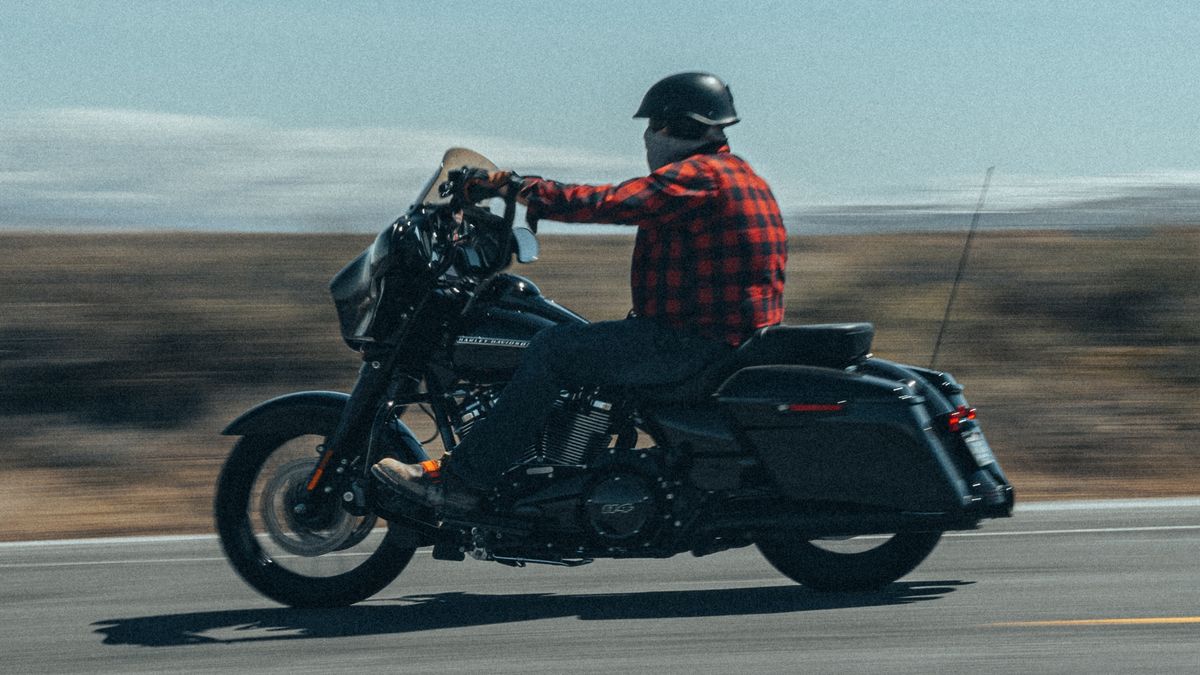
No — Florida does not require motorcycle liability insurance to register or ride. It is one of a small group of states that leaves it optional, and that surprises most riders moving in from elsewhere.
But “not required” is not the same as “no consequences.” Three parts of Florida law still apply to you, two of them only work if you have a policy — and in 2023 the state changed a fourth thing that makes the decision materially riskier than it was.
Why Florida doesn’t require it
Florida runs a no-fault system built on Personal Injury Protection (PIP). Before registering a vehicle you must show proof of $10,000 in PIP and $10,000 in Property Damage Liability.
The catch is in the wording: that requirement applies to vehicles “with at least four wheels.” Motorcycles fall outside it. No PIP requirement, no PDL requirement, no insurance needed at the tag office.
It also means the reverse — PIP does not cover you as a rider. The system that pays a car driver’s medical bills regardless of fault simply does not extend to motorcycles. That is the single most misunderstood fact about riding in Florida.
What the law still requires
Financial responsibility if you cause a crash
Florida Statute 324.021 sets the amounts you must be able to cover:
- $10,000 — bodily injury or death of one person
- $20,000 — bodily injury or death of two or more people in one crash
- $10,000 — property damage
The statute covers any self-propelled vehicle required to be licensed for highway use, motorcycles included. Nobody verifies this when you register. It becomes very real the moment you’re at fault in a collision: without a policy, those amounts come from your own money, and until you satisfy them your licence and registration are exposed to suspension.
Medical coverage if you ride without a helmet
Florida Statute 316.211 lets riders over 21 skip the helmet — but only when covered by “an insurance policy providing for at least $10,000 in medical benefits for injuries incurred as a result of a crash.”
So the helmet exemption everyone associates with Florida is conditional on carrying insurance. Ride uninsured and helmetless and you are in violation, regardless of your age. Riders under 21 must wear a compliant helmet in all cases, and eye protection is mandatory for every rider with no exemption whatsoever. We cover this in detail in Florida’s motorcycle helmet law.
Whatever your lender requires
If the bike is financed, state law is irrelevant — the loan agreement governs. Lenders require comprehensive and collision coverage for the life of the loan, because the bike is their collateral. That obligation lasts until the balance is paid off, and the payment continues even if the bike is written off. You can see how the term affects that exposure in our motorcycle loan calculator.
The 2023 change that shifts the maths
Florida’s comparative fault statute, § 768.81, gained a new subsection (6) in 2023:
“In a negligence action to which this section applies, any party found to be greater than 50 percent at fault for his or her own harm may not recover any damages.”
The 2022 edition of that statute has five subsections and no fault threshold in it at all. Until 2023 Florida ran pure comparative negligence: a rider found 70 percent to blame still recovered 30 percent of their losses. Now, past the halfway line, they recover nothing.
Put that beside the rest of the picture and the reason it matters becomes obvious:
| Layer that normally catches a rider | In Florida |
|---|---|
| Compulsory insurance | None |
| No-fault medical cover (PIP) | Doesn’t apply to motorcycles |
| Partial recovery when mostly at fault | Removed in 2023 |
Three safety nets, none of them under you. That is the actual argument for buying coverage in a state that doesn’t ask you to.
The risk nobody plans for: being hit by someone else
Everything above concerns crashes you cause. The harder scenario is the one you don’t control.
If an uninsured or underinsured driver hits you in Florida, PIP won’t help — it doesn’t apply to motorcycles. Without your own uninsured motorist and medical payments coverage, your route to recovering medical costs runs through a personal claim against the other driver, which is only as good as their ability to pay.
And note what the 2023 rule does to that claim: if the fault argument lands past 50 percent against you — a very ordinary outcome in a contested motorcycle collision — the claim is worth nothing regardless of how badly you were hurt. Uninsured motorist and medical payments coverage pay out on your own policy without you having to win that argument. They are the only layers in Florida that don’t depend on the fault fight.
This is why “Florida doesn’t require it” is such a poor basis for the decision. The requirement question and the exposure question have completely different answers.
So what should you actually carry?
That depends on the bike, where you keep it and how you ride. The short version:
- Liability at least meeting the 324.021 amounts — more if you have assets worth protecting.
- Medical payments, at minimum $10,000 if you plan to use the helmet exemption, and realistically more.
- Uninsured/underinsured motorist — the one that works when PIP won’t and when the fault argument goes against you.
- Comprehensive and collision if the bike is financed, because your lender will require it anyway.
We break down coverage types, what drives premiums by city, and what Florida riders actually pay in our full guide to motorcycle insurance in Florida.
How Florida compares to its neighbours
| Florida | Texas | Georgia | |
|---|---|---|---|
| Insurance required? | No | Yes — 30/60/25 | Yes — 25/50/25 |
| No-fault cover for riders | None | — | — |
| UM coverage | Optional | Optional | Required in the policy by statute |
| Damages barred at | Above 50% | — | 50% or more |
Georgia’s approach is the instructive contrast: it makes both liability and uninsured motorist coverage part of the policy by statute — see motorcycle insurance in Georgia. Texas mandates liability but leaves the rest to you: motorcycle insurance in Texas. Florida asks for nothing, which puts the whole decision on the rider.
Frequently asked questions
Can I ride a motorcycle without insurance in Florida?
Yes, legally — Florida doesn’t require motorcycle liability insurance to register or operate. But you must wear a helmet, since the over-21 exemption requires $10,000 in medical benefits, and you remain personally liable for damages if you cause a crash.
Do I need proof of insurance for a motorcycle in Florida?
Not to register the bike. Florida’s PIP and PDL proof requirements apply only to vehicles with at least four wheels.
What do you need to legally ride a motorcycle in Florida?
A motorcycle endorsement or Motorcycle Only licence, which requires completing an approved safety course; a registered and tagged motorcycle; eye protection at all times; and a helmet unless you are over 21 with at least $10,000 in medical benefits coverage.
Does Florida PIP cover motorcycle accidents?
No. PIP applies to vehicles with four or more wheels. Riders are outside the no-fault system, which makes medical payments and uninsured motorist coverage far more important for motorcyclists than for car drivers in Florida.
What happens if an uninsured driver hits my motorcycle in Florida?
Without your own uninsured motorist coverage, you would pursue the at-fault driver personally, and recovery depends entirely on their assets. PIP will not step in as it would for a car occupant.
Can I still claim if the crash was partly my fault in Florida?
Only if your share is 50 percent or less. Since 2023, § 768.81(6) bars any party found more than 50 percent at fault for their own harm from recovering damages at all — a change from the pure comparative system Florida used before.
General information about Florida law as of 2026, not legal or insurance advice. Based on Florida Statutes 316.211, 324.021 and 768.81, the last checked against both the 2022 and 2023 editions published by the Florida Senate, and FLHSMV requirements. Verify current rules with official sources.