
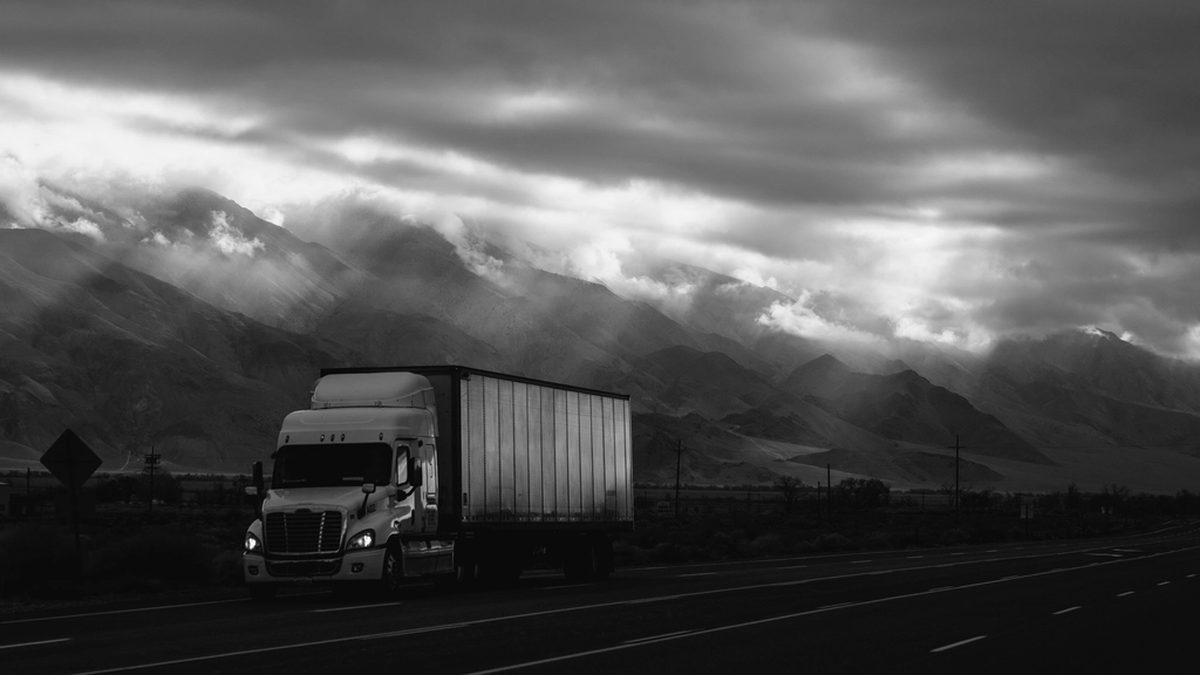
A coast-to-coast motorcycle move runs about $600 to $1,350 on an open trailer, and $750 to $1,500 enclosed. It is also, per mile, the cheapest shipping you will ever buy.
That second part surprises people. The instinct is that a 2,800-mile move must be brutal compared to a 300-mile one. It is the opposite.
The per-mile rate collapses with distance
Motorcycle Shippers publishes the numbers plainly: a 300-mile move works out to roughly $2.00 per mile, while a 2,000-mile move drops to about $0.45 per mile.
The reason is that most of what you are paying for happens at the two ends. Someone drives to you, loads the bike, straps it down, documents its condition, and repeats all of that at delivery. Those costs are identical whether the trailer then drives 300 miles or 3,000. Spread across a long haul on a lane the carrier already runs, they almost disappear.
| Distance | Open trailer | Enclosed trailer |
|---|---|---|
| Under 500 miles | $200 – $500 | $250 – $680 |
| 500 to 1,000 miles | $300 – $650 | $450 – $850 |
| 1,000 to 2,000 miles | $450 – $870 | $600 – $1,150 |
| 2,000+ miles | $600 – $1,350 | $750 – $1,500 |
Ranges span the 2026 rate cards published by uShip, move.org and Motorcycle Shippers. Run your own distance through the motorcycle shipping cost calculator to see all three side by side.
How long it takes
Cross-country transport is not a courier service, and the schedule is set by the carrier’s route rather than by you.
- Regional moves: around 2 to 5 days in transit.
- Coast to coast: commonly up to 9 days for enclosed transport.
- Pickup window: separate from transit, and often the longer wait. Carriers fill a trailer before they roll.
The number that matters is total time from booking to delivery, not transit time. Ask for both, in writing, and treat any single-date promise on a 2,500-mile lane with suspicion.
Should you just ride it instead?
The honest comparison for a cross-country move, against a shipping cost of roughly $600 to $1,000 open:
- Fuel for 2,800 miles at 45 mpg is 62 gallons.
- Four to six nights of accommodation, unless you are camping.
- Roughly 2,800 miles of wear — tyres, chain, a service interval you did not plan for. On most bikes that is a meaningful chunk of a tyre set.
- Five to seven days of your time, which is the real cost most people leave out.
Ridden as a trip you actually wanted, that is a holiday and the maths is irrelevant. Ridden as a chore in February, shipping wins comfortably. The crossover point is around 1,000 miles: below it, riding or renting a trailer usually costs less; above it, shipping is normally cheaper once everything is counted.
Worth checking before you commit either way: how much those miles cost you in resale value, and how long the bike is built to last. Adding 2,800 miles to a machine you plan to sell next year is not free.
Where the money is won on a long move
- Book against the season. Bikes move north in spring and south in autumn. Going the other way on the same lane, you are filling a trailer that would otherwise run empty, and it is priced accordingly.
- Give a wide pickup window. On a long lane, a five-day window instead of a fixed date can move you from the top of the published band to the bottom.
- Use terminals at both ends if you can get to them. Door-to-door on a cross-country route costs more, and residential access is where carriers add time.
- Get a marketplace quote and a direct carrier quote. On long lanes the gap between them is at its widest, because an empty return slot is worth more to a carrier than a short hop.
Those tactics are covered in full in the cheapest way to ship a motorcycle.
What to sort before pickup
Cross-country means the bike is out of your hands for a week or more, so the preparation matters more than on a short hop.
- Fuel down to roughly a quarter tank. Carriers ask for this, and it saves weight.
- Disconnect or secure the battery if the bike will sit for over a week. Related: what a healthy resting voltage looks like when you reconnect it.
- Remove anything loose — screens, luggage, aftermarket mirrors, GPS mounts.
- Photograph every panel, both wheels and the odometer, dated, at pickup and delivery. This is the entire basis of a damage claim.
- Check the valuation cap. Carrier coverage is capped and is not your insurance. Motorcycle Shippers includes $7,000 with zero deductible and sells more at $7.00 per $1,000 of declared value.
If you are shipping a bike you are buying rather than one you own, price the whole thing first: what a motorcycle really costs and the loan calculator cover the parts that outlast the shipping bill. If you are buying it unseen, decode the number first with the motorcycle VIN decoder and check whether it is reported stolen.
One decision sits inside the quote and changes it more than distance does: whether the machine travels crated or uncrated. That is worked through in whether you need a crate to ship a motorcycle, and the cheaper routes overall are compared in the cheapest way to ship a motorcycle.
Frequently asked questions
How much does it cost to ship a motorcycle across the country?
About $600 to $1,350 on an open trailer and $750 to $1,500 enclosed, based on 2026 rates published by uShip, move.org and Motorcycle Shippers. Broker averages for moves over 2,000 miles sit near $990 open and $1,300 enclosed.
How long does cross country motorcycle shipping take?
Commonly up to 9 days in transit coast to coast, with regional moves running 2 to 5 days. The pickup window is separate and is often the longer wait, because carriers fill a trailer before departing.
Is it cheaper to ship a motorcycle or ride it across the country?
Past roughly 1,000 miles shipping is usually cheaper once fuel, four to six nights of accommodation, tyre and chain wear and a week of your time are counted. Below that, riding or renting a trailer normally wins.
Why is long distance motorcycle shipping cheaper per mile?
Because loading, strapping, documentation and the two collection legs cost the same regardless of distance. A 300-mile move runs about $2.00 per mile and a 2,000-mile move about $0.45, as those fixed costs spread across more miles on an established lane.
Open or enclosed for a cross country move?
Enclosed costs roughly 30 to 40% more, about $310 extra on a move over 2,000 miles by move.org’s averages. It is worth it for a bike where paint damage is a real financial event, and hard to justify for a commuter that already lives outdoors.
Cost ranges compiled from rate cards published by uShip, move.org and Motorcycle Shippers during 2026. Estimates for comparison, not quotes. Last reviewed August 2026.