
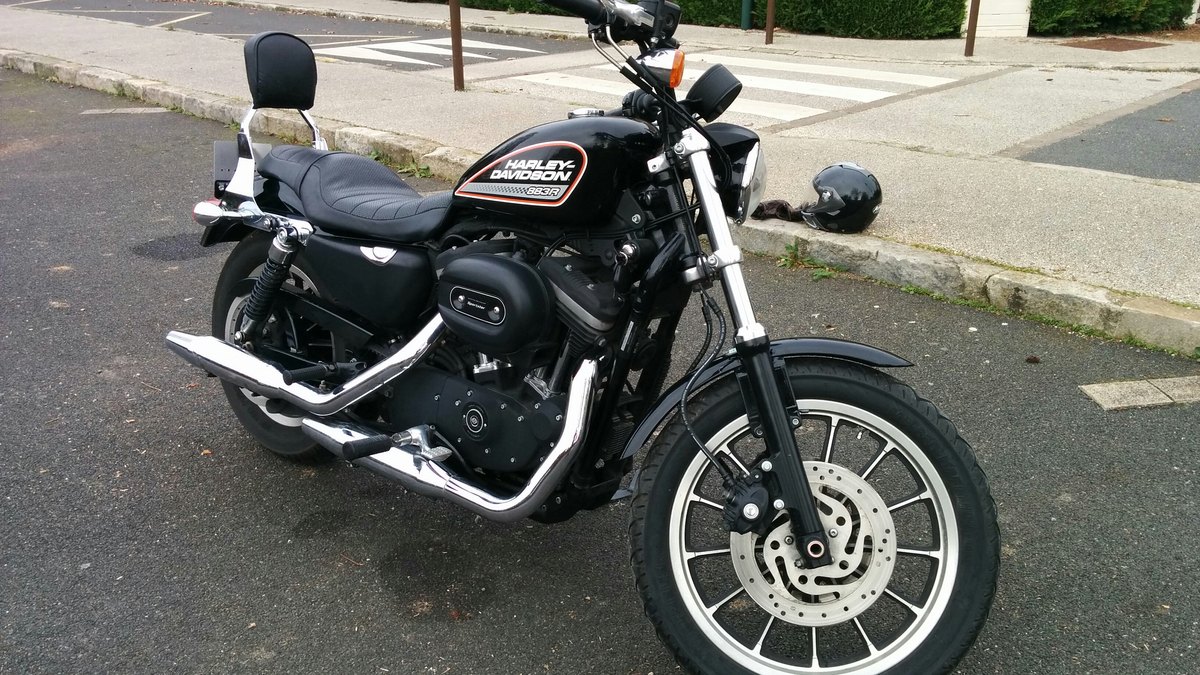
Motorcycle VIN decoder
Type the 17 characters stamped on the frame. The structure and the check digit are worked out in your browser instantly; the make, model and engine come from the free public database run by the US National Highway Traffic Safety Administration.
The check digit and the segment breakdown are exact arithmetic done on your device. The make, model and engine figures come from the NHTSA vPIC database and are only as complete as the manufacturer filed them. A valid VIN is not a clean history — it says nothing about accidents, theft, outstanding finance or the odometer.
What the seventeen characters are
Every motorcycle built for sale in the United States since 1981 carries a seventeen-character VIN, and the format is fixed by regulation rather than by the manufacturer. It splits into blocks that each do a different job:
| Positions | What it is | What it tells you |
|---|---|---|
| 1–3 | World Manufacturer Identifier | Who built it and where |
| 4–8 | Vehicle descriptor | Model, engine, body style — the manufacturer decides the coding |
| 9 | Check digit | Nothing about the bike. It exists to prove the other sixteen are right |
| 10 | Model year | A letter or number on a thirty-year cycle |
| 11 | Plant | Which factory |
| 12–17 | Serial number | The individual machine |
One rule applies across the whole string: a VIN never contains I, O or Q. They were left out deliberately so nobody confuses them with 1 and 0. If you have written down an O, it is a zero.
The ninth character is a test, and almost nobody uses it
Position 9 carries no information about the motorcycle at all. It is a checksum: a number derived from the other sixteen characters, so that a single mistyped or transposed character makes the whole VIN fail arithmetic.
The calculation is fixed by the standard. Every character is converted to a number, multiplied by a weight that depends on its position, the products are added up, and the total is divided by eleven. The remainder is the check digit — and if the remainder is ten, the digit is the letter X, which is the only place an X appears for that reason.
check digit = (sum of character values × position weights) mod 11
This matters when you are buying. Copy a VIN wrong off a listing and you will look up the wrong bike, or none at all. Run it through the checksum first and a transposition shows up immediately, before you drive anywhere.
It also means a VIN cannot be invented casually. A made-up seventeen-character string will fail the check about ten times out of eleven. That is not a fraud detector on its own — anyone determined can compute a valid digit, exactly as the tool above does — but it does catch careless errors and careless fakes.
The calculator runs that arithmetic in your browser and tells you what position 9 should be. It was verified two ways: against the worked example published with the standard, which comes out as X; and by taking six motorcycle VINs with a wrong ninth character, substituting the digit the formula produces, and asking the NHTSA database whether it was satisfied. It replied that the check digit was correct in five of the six.
The model-year rule that everyone repeats gets motorcycles wrong
Position 10 is the model year, and here is where most VIN guides will mislead you.
The letters run in a thirty-year cycle. F is 2015 — and it is also 1985. G is 2016, and 1986. Every code has two answers, which is fine for a 2015 bike and useless if you cannot tell which half of the cycle you are in.
The standard trick offered for resolving it is to look at position 7: if it is a number the vehicle is from 1980–2009, and if it is a letter it is from 2010–2039. That rule is real, but it was written for passenger cars.
On motorcycles it fails. Take this Honda VIN, checked against the NHTSA database in August 2026:
| VIN | Position 7 | What the rule says | What NHTSA says |
|---|---|---|---|
| JH2SC5903GK000001 | 9 — a number | 1986 | 2016 |
| 1HD1KHM1XFB606062 | M — a letter | 2015 | 2015 ✓ |
Thirty years out, on a bike anyone might be looking at. That is why the tool above shows both candidate years rather than picking one, and why the lookup button matters: the manufacturer’s filing with NHTSA is the thing that settles it, not a rule of thumb borrowed from cars.
Where the free data actually comes from
The lookup button queries vPIC, the Vehicle Product Information Catalog run by the US National Highway Traffic Safety Administration. Manufacturers are required to file how their VINs are constructed, and the resulting database is public and free to query.
For a motorcycle it will typically return the make, model, model year, manufacturer, vehicle type, body class, number of cylinders, displacement in cc, engine horsepower, and the plant city and country. That is the same source the first result in Google for this search is built on — there is no paid tier that has better structural data, because this is the data manufacturers are obliged to file.
What it will not always have is complete records for small manufacturers, grey imports and older machines. A blank make is not a red flag by itself; it usually means nobody filed that pattern.
What a VIN cannot tell you, and where the risk actually is
This is the part the sites selling history reports are careful about, and it is worth being blunt: decoding a VIN tells you what the bike is, not what has happened to it. The number is a specification, not a biography.
Four things it does not contain:
- Whether it is stolen. Nothing in the seventeen characters changes when a bike is taken. That check is separate, and it is free — see how to check if a motorcycle is stolen.
- Accident and salvage history. Written-off and rebuilt bikes carry the same VIN they always did; what changes is the title, which is a separate record.
- Outstanding finance. A lien follows the title, not the number. Buying a bike with money owed on it is the expensive version of this mistake.
- The odometer. The VIN has no mileage in it at all.
Those live in title records and history reports, which is what motorcycle history reports covers — including which parts of one are worth paying for and which you can get free.
Finding the number on the bike
Check the VIN on the machine itself and not only on the paperwork. On most motorcycles it is stamped into the steering head, on the right side of the frame just below the handlebars, and there is usually a second one on the engine case that will not match — that is the engine number, a different thing entirely.
Compare the frame stamping against the title and the seller’s listing, character by character. A mismatch, a stamping that looks re-struck, or a plate with fresh rivets are the three things that end a viewing. The full walkthrough of where to look on different frame types is in where the VIN is on a motorcycle.
Once the number checks out
A decoded VIN is the first of four steps in a private sale, and the other three are where the money is:
- What it is worth. Trade-in and private sale are different numbers, and the gap between them is bigger than most sellers expect — what your motorcycle is worth.
- The paperwork. A bill of sale is what proves the sale happened, and several states will not transfer a title without one — motorcycle bill of sale.
- The title. The document that actually transfers ownership, and the step that goes wrong most often — motorcycle title transfer.
If you are still working out the budget rather than the bike, start with how much a motorcycle costs and the motorcycle loan calculator. And if the bike is a long way away, the shipping cost calculator tells you what getting it home adds.
Frequently asked questions
How do I decode a motorcycle VIN for free?
Enter the seventeen characters into the decoder above. The structure and the check digit are worked out in your browser, and the make, model and engine come from the NHTSA’s public vPIC database, which is free and is the same source the commercial decoders build on.
Where is the VIN on a motorcycle?
Usually stamped into the steering head on the right side of the frame, just below the handlebars. There is normally a second number on the engine case, but that is the engine number and it will not match the VIN.
What is the 9th digit of a VIN?
The check digit. It carries no information about the motorcycle; it is calculated from the other sixteen characters so that a mistyped or transposed character makes the VIN fail arithmetic. If the remainder of the calculation is ten, the check digit is written as X.
Can you tell the year of a motorcycle from the VIN?
Position 10 gives the model year, but each code covers two years thirty apart, so F is both 2015 and 1985. The common rule of using position 7 to decide which is a passenger-car rule and it gets motorcycles wrong — one Honda VIN with a numeric position 7 that the rule dates to 1986 is recorded by NHTSA as 2016. Use the manufacturer’s filed record to settle it.
Does a valid VIN mean the motorcycle is not stolen?
No. A valid check digit only means the seventeen characters are arithmetically consistent, which mostly proves it was copied correctly. Theft, salvage history, outstanding finance and mileage are all separate records and none of them are encoded in the VIN.
How many characters is a motorcycle VIN?
Seventeen, for anything built for the US market since 1981, and it never contains the letters I, O or Q. Older motorcycles can have shorter numbers in a manufacturer’s own format, which standard decoders cannot read.