Last updated: February 2026 · gearriderhub.com/
Every state in the US requires a motorcycle permit or endorsement before you can legally ride on public roads. The good news: learning how to get a motorcycle permit is straightforward, and there are two main paths — the DMV written test route or the MSF (Motorcycle Safety Foundation) course route. Most experienced riders recommend the MSF route because over 40 states waive the DMV riding skills test entirely if you complete the course.
Whether you want to get a motorcycle license for weekend rides or daily commuting, the permit is the required first step. This guide covers how to get your motorcycle learner permit regardless of which state you’re in, with specific motorcycle permit requirements for the 10 most popular states. We’ll walk through both paths step by step, break down the real costs (including the ones beginners forget), explain what your permit actually lets you do — and what it doesn’t — and give you the best tips to pass the motorcycle permit test on your first try.
Motorcycle Permit vs. Motorcycle License — What’s the Difference?
Before diving into the process, understand what you’re actually applying for. A learner permit and a full license are two different credentials with very different privileges.
| Feature | Learner Permit | Full Motorcycle License (M Endorsement) |
|---|---|---|
| Written test required? | Yes | Already completed |
| Road/skills test required? | No (not yet) | Yes (or MSF waiver) |
| Ride unsupervised? | No — licensed rider must supervise (rules vary) | Yes |
| Carry passengers? | No (most states) | Yes |
| Ride at night? | Restricted in some states | Yes |
| Highway riding? | Restricted in some states | Yes |
| Duration | 90 days–2 years (varies by state) | Renews with driver’s license |
In short: a permit lets you practice legally. A license lets you ride freely. The permit is step one — the license is the destination.

Path 1 — The DMV Route (Written Test + Road Test)
This is the traditional path. You study on your own, pass a written test for the permit, practice riding with supervision, then return to pass a road skills test for the full license.
⚠️ Important: This path is NOT available in all states. Several states — including Florida (since 2008), Texas, and others — now legally mandate completion of an approved motorcycle safety course (MSF Basic RiderCourse or equivalent) for ALL new riders seeking a motorcycle endorsement, regardless of age. In these states, you cannot walk into the DMV and take a road skills test; the course IS the skills test. If you’re in one of these states, Path 2 (MSF Course) is your only option. Always verify with your state’s DMV website before planning your route to a motorcycle license.
Step 1: Study the Motorcycle Operator’s Manual
Every state DMV publishes a free motorcycle operator’s manual online as a PDF download. It covers right-of-way rules, lane positioning (the three positions within a lane), braking technique, cornering, hazard awareness, road signs, and state-specific laws. Plan on 3–5 hours of study time — it’s not long, but the material is specific to motorcycles and different from what you learned for your car license.
Step 2: Visit the DMV — Take the Written Test
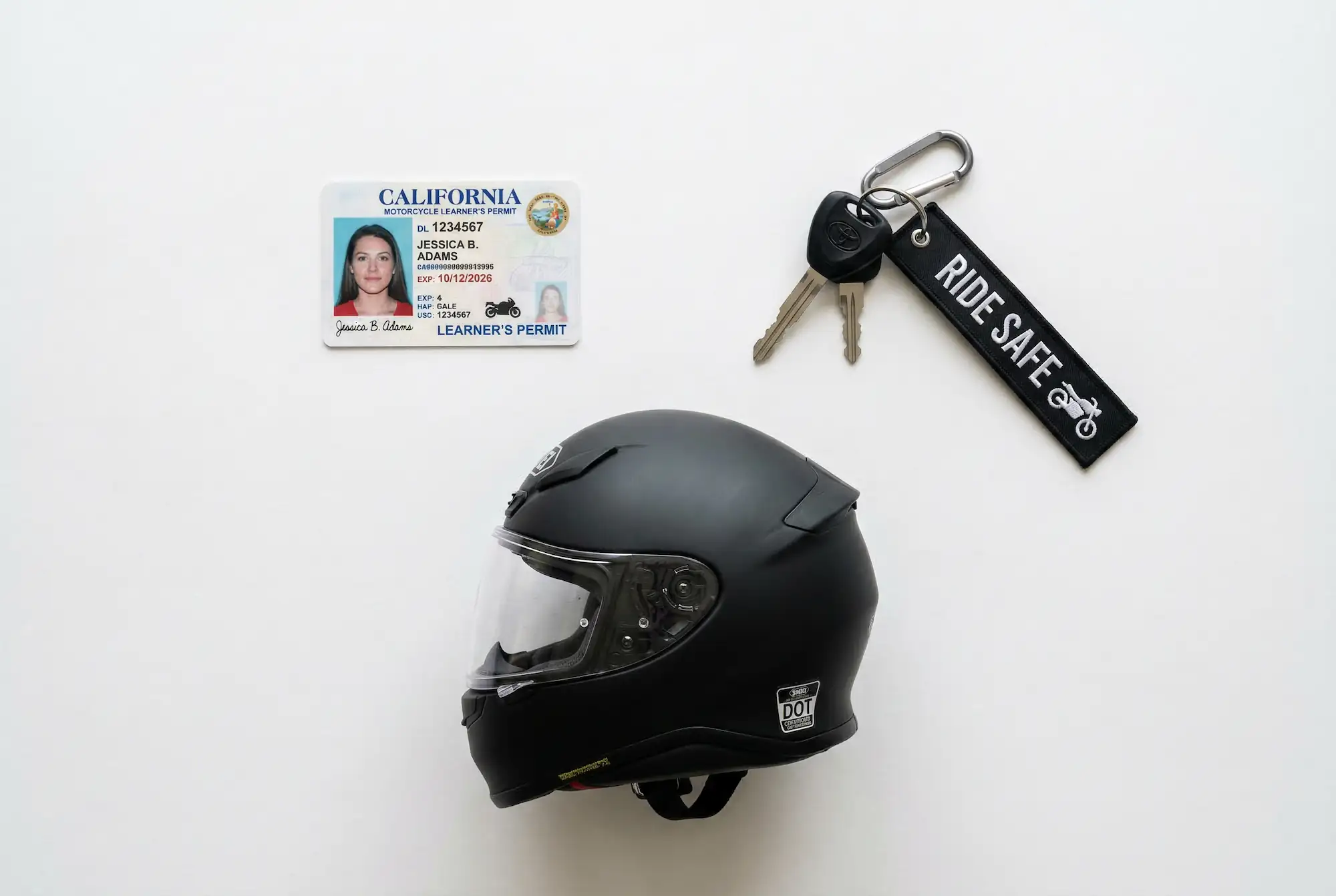
Bring a valid photo ID, proof of residency, and your Social Security card (exact document requirements vary by state — check your DMV’s website before you go to avoid a wasted trip). The test is typically 20–30 multiple-choice questions with a passing score of 70–80%. Some states allow you to take the written test online (New York, for example), while others require in-person testing only. The permit application fee ranges from $5 to $30 depending on your state (see the state table below). If you pass, you’ll receive a temporary motorcycle learner permit on the spot — or in some cases, mailed within 1–2 weeks.
Step 3: Practice Riding with Your Permit
With your permit in hand, you can legally practice on public roads — but with restrictions. In most states, you must be supervised by a licensed motorcyclist (age 21+ in most states) who remains within sight or a quarter mile. The specifics of supervision vary by state. In New York, for example, the DMV requires a supervisor with a valid motorcycle license who remains within 1/4 mile and within sight — but does not explicitly require the supervisor to be riding a motorcycle (the supervisor needs a motorcycle license, not necessarily a motorcycle at that moment). In other states, the supervisor may be required to be on a separate motorcycle. Always check your specific state’s permit supervision rules. The New York DMV recommends at least 30 hours of supervised practice before attempting the road test, which is solid advice regardless of your state.
Step 4: Schedule and Pass the Road Skills Test
You’ll need to bring your own registered and insured motorcycle to the DMV for this test. ⚠️ Insurance note: Many insurance companies charge significantly higher premiums — or refuse coverage entirely — for riders who only hold a learner’s permit and have no prior riding history. This can be a major hidden cost of the DMV route. By contrast, the MSF course (Path 2) provides a motorcycle and insurance during training, removing this barrier entirely. If you’re struggling to find affordable insurance for the DMV road test, this alone may make the MSF route more practical. The test typically includes figure-8s, cone weaving, emergency stops, slow-speed maneuvering, and U-turns. The fail rate on first attempts runs around 30–40%, mostly due to nerves and insufficient low-speed practice. Road test fees range from $5 to $25.
Path 2 — The MSF Course Route (Recommended)
This is the path most experienced riders and every motorcycle forum unanimously recommend, and for good reason. The MSF course motorcycle training program combines professional instruction with a built-in road test waiver in most states. In states like Florida and Texas, this is not just recommended — it is legally required for all new riders.
What Is the MSF Basic RiderCourse (BRC)?
The Basic RiderCourse is a 2–3 day program (typically one evening of classroom instruction plus a full weekend of riding) run by certified instructors. The classroom portion covers 5–6 hours of traffic strategy, mental skills for riding, and risk awareness. The riding portion consists of 10–12 hours on a closed practice range where you learn clutch control, shifting, braking, swerving, and cornering — the exact skills tested on the DMV road test.
The best part for beginners: motorcycles and helmets are provided by the course. You don’t need to own a bike or have any prior riding experience. Most courses use lightweight 250cc motorcycles that are ideal for learning — low seat height, forgiving power delivery, and easy-to-reach controls. The class size is typically 6–12 students per instructor, so you get individual attention and feedback. The pass rate is roughly 90% or higher for attentive students who follow instructions. If you don’t pass, many providers let you retake the course at a reduced fee.
Cost ranges from $200 to $350 depending on your state and location, though some states subsidize the course — Pennsylvania, for example, offers it free for state residents through the PAMSP (Pennsylvania Motorcycle Safety Program). Several other states offer partial subsidies or discounted rates for younger riders. In Texas, DPS-administered courses are available for as little as $30, though availability is limited — most third-party providers charge $250–$300.
The Big Advantage — Road Test Waiver
In over 40 states, completing the MSF BRC earns you a completion card that waives the DMV road skills test entirely. You take your completion card to the DMV, pay the license fee, and walk out with your full motorcycle endorsement. No road test scheduling, no bringing your own bike to the DMV, no examiner watching you sweat through figure-8s. In some states like Texas, the MSF completion even waives the written knowledge test.
A handful of states do not accept the MSF waiver for the skills test — always verify with your specific state DMV website before enrolling.
How to Find an MSF Course Near You
Visit msf-usa.org and use the “Find a Course” tool. Courses fill up fast in spring and summer — book 2–4 weeks in advance if you want a weekend slot. Wear long pants, over-the-ankle boots, long sleeves, and full-finger gloves. A DOT-approved helmet is usually provided, but check with your specific course provider.
State-by-State Motorcycle Permit Requirements (Top 10 States)
| State | Min. Age (Permit) | Permit Fee | Permit Duration | MSF Waiver? | Road Test Fee | Helmet Required? |
|---|---|---|---|---|---|---|
| California | 15½ | ~$38 | 12 months | Yes (CMSP). Mandatory for riders under 21. | Included in app fee | Yes — all riders |
| Texas | 15 | $16 | 1 year | Yes (MSF mandatory for ALL new applicants). Waives written + skills for 18+. | Included | All permit holders must wear helmet. Exemption (21+ with course or insurance) applies ONLY to fully endorsed Class M riders. |
| Florida | 16 | ~$48 | 12 months | BRC legally required for ALL new riders (since 2008). No DMV road test option. | Included | All permit holders must wear helmet. Exemption (21+ with $10,000 insurance) applies ONLY to fully endorsed riders. |
| New York | 16 (Class MJ) | $21–$120* | 12 months | Yes | Included | Yes — all riders |
| Pennsylvania | 16 | $12 | 1 year | Yes (PAMSP — free course) | Included | Yes — ALL permit holders must wear helmet. The partial exemption (21+ with course or 2+ yrs experience) applies ONLY to fully licensed riders. With 0 years experience, every permit holder must wear a DOT helmet. |
| Illinois | 16 | ~$10 | 24 months | Yes | $5 | No universal law |
| Ohio | 15½ | ~$25 | 1 year | Yes | $10 | Under 18 or <1 yr experience |
| Georgia | 17 | ~$10 | 12 months | Yes | $10 | Yes — all riders |
| North Carolina | 16 | ~$2.50 | 18 months | Yes | $3.75 | Yes — all riders |
| Michigan | 16 | ~$10 | 180 days | Yes | $5 | Yes — ALL permit holders must wear helmet. The no-helmet exemption (21+ with 2+ yrs endorsement or safety course + $20,000 insurance) requires a full motorcycle endorsement, which permit holders do not have. |
*New York fee depends on whether you already hold a driver’s license and your county of residence (MCTD surcharge applies in NYC metro area). Fees and requirements change — always verify with your state’s DMV website before applying.
⚠️ Critical helmet note for permit holders: In states with “partial” helmet laws (Texas, Florida, Pennsylvania, Michigan, Ohio, and others), the exemptions that allow riding without a helmet apply ONLY to fully endorsed riders who meet specific criteria (age, experience, insurance, or safety course completion). Permit holders in these states should assume helmets are always mandatory. The table above reflects permit-holder requirements, which differ from fully-licensed-rider requirements. When in doubt, wear a DOT-approved helmet — it’s always legal, always smart, and most MSF courses require one regardless.
Already have your license? Check our do I need a motorcycle license guide for a deeper dive into endorsement types, moped exceptions, and the consequences of riding without one.

Motorcycle Permit Restrictions — What You Can’t Do Yet
A permit is a learner’s credential, not a full license. These restrictions exist for a reason — permit holders are statistically the most vulnerable riders on the road. The specifics vary by state, but these are the most common rules:
- No passengers — permit holders cannot carry a passenger on the bike in the vast majority of states.
- Supervised riding only — a licensed motorcyclist must accompany you. Distance and proximity rules vary (New York requires within ¼ mile and within sight; other states are less specific). The supervisor must hold a valid motorcycle license, but not all states require the supervisor to be on a separate motorcycle — some states’ laws only require the supervisor to maintain visual contact and proximity. Check your state DMV for the exact supervision rules.
- No night riding — some states restrict riding between sunset and sunrise on a permit.
- No highway/freeway — some states prohibit interstate or limited-access highway riding on a permit.
- No alcohol — zero-tolerance BAC limit in most states for permit holders, regardless of age.
- Must wear helmet — In most states, permit holders must wear a DOT-approved helmet even if the state has a partial helmet law that exempts certain licensed riders. Helmet exemptions are tied to the full motorcycle endorsement, not the learner’s permit. Treat helmet use as mandatory while on a permit.
- Displacement limits — Some states restrict the engine size of motorcycles that permit holders (especially minors) can operate. For example, Texas limits 15-year-olds to motorcycles of 250cc or less. Check your state for any cc restrictions before purchasing or borrowing a motorcycle to practice on — showing up to the DMV on a 1000cc sportbike when your permit restricts you to 250cc is an expensive mistake.
⚠️ Violating permit restrictions can result in a ticket ($50–$200+), permit suspension, or delayed eligibility for your full license. These restrictions aren’t suggestions — they’re enforceable laws. In some states, getting a ticket while on a permit can also affect your regular driver’s license and insurance rates.
Total Cost Breakdown — What You’ll Actually Spend
| Expense | DMV Route | MSF Route |
|---|---|---|
| Permit application fee | $5–$30 | $5–$30 |
| MSF Basic RiderCourse | N/A | $200–$350 (free in PA; $30 at DPS-run sites in TX) |
| DMV road test fee | $5–$25 | Waived (in most states) |
| License/endorsement fee | $15–$50 | $15–$50 |
| Total | $25–$105 | $220–$430 |
The MSF route costs more upfront, but you get professional instruction, the motorcycle is provided (you don’t need to own one yet), and the road test is waived in 40+ states. The DMV route is cheaper on paper, but you’ll need access to a motorcycle for both practice and the skills test, plus you’ll want someone experienced to teach you — and that informal instruction isn’t free in any practical sense.
Hidden costs beginners forget: You’ll also need riding gear before your first day on a bike. At minimum, budget for a DOT-approved helmet ($80–$300), gloves ($25–$80), a riding jacket ($100–$300), and over-the-ankle boots ($60–$200). A helmet and gloves are non-negotiable from day one — the MSF course requires them, and so does basic survival instinct. Even if you choose the cheaper DMV route, you’ll spend more on gear than on the permit itself. Factor this into your budget from the start rather than being surprised later.
Insurance costs (DMV route only): To take the DMV road test, your motorcycle must be registered and insured. Many insurance companies charge significantly higher premiums for permit-only riders with no riding history — or may refuse coverage entirely. Quotes of $2,000–$4,000/year for liability-only coverage on a permit are not uncommon for riders under 25. This hidden cost pushes many beginners toward the MSF route, where the training school provides a motorcycle and insurance during the course. After completing the MSF course, insurance premiums typically drop 5–15% due to the completion discount — partially offsetting the course tuition over time.
Tips to Pass the Motorcycle Permit Test
The written test isn’t difficult if you prepare, but it does cover motorcycle-specific material that the car driving test doesn’t touch. Here’s how to pass on your first attempt:
- Study the state motorcycle manual — the entire test is drawn from it. Read it at least twice.
- Use free online practice tests — your state DMV website often links them, and sites like DMV-written-test.com offer state-specific practice exams.
- Focus on: right-of-way rules, lane positioning (positions 1, 2, and 3 within a lane), BAC limits, and road sign recognition.
- Head checks (blind spot verification) — This is the single most emphasized safety concept in the MSF curriculum and state motorcycle manuals. Questions about when and how to check your blind spot (by physically turning your head, not relying solely on mirrors) appear on nearly every state’s permit test. Know the situations that require a head check: lane changes, merging, turning at intersections, and pulling away from a curb. Many test-takers miss these questions by choosing “check mirrors” instead of “turn your head to look.”
- Most commonly missed questions: proper following distance (2-second minimum, 4 seconds in poor conditions), group riding formation (staggered, not side-by-side), and what to do at railroad crossings (cross at a 45° to 90° angle depending on the track orientation relative to your lane, and rise slightly off the seat with knees bent to use your legs as shock absorbers — do NOT stand fully upright on the pegs, as this dangerously raises your center of gravity).
- You can retake it — if you fail, most states allow a retake after a 1–7 day waiting period with a small retake fee of $5–$10.

Frequently Asked Questions
Can I ride a motorcycle with just a permit?
Yes, but with restrictions. Most states require you to be supervised by a licensed motorcyclist, prohibit carrying passengers, and may restrict night or highway riding. A permit is a learner’s credential — it lets you practice legally on public roads, not ride freely.
How long does a motorcycle permit last?
It varies by state — typically 90 days to 2 years. If it expires before you get your full license, you’ll need to re-apply and retake the written test in most states. Don’t let it lapse, especially since you’ll likely lose any fees already paid.
Do I need my own motorcycle for the permit test?
Not for the written test — that’s just a knowledge exam taken at the DMV. For the DMV road skills test, yes — you must bring a registered and insured motorcycle. Note: In states like Florida and Texas where the MSF course is mandatory, you will never need your own motorcycle for testing — the course provides one. For the MSF course in any state, bikes are provided by the training center, which is one of the main reasons beginners prefer this path.
Is the MSF course worth the money?
Yes, overwhelmingly. You get professional instruction on a provided motorcycle, the road test is waived in 40+ states, and riders who complete an approved safety course statistically have a lower crash risk in their first year of riding. The $200–$350 cost is less than one set of new motorcycle tires — and it could save your life. Many insurance companies also offer discounts of 5–15% on premiums if you can show an MSF completion card, which helps offset the course cost over time. If you want the fastest, safest way to get a motorcycle license, the MSF course is it. In states like Florida and Texas, you don’t have a choice — the course is required by law.
Can I get a motorcycle permit at 16?
In most states, yes. The minimum age for a motorcycle learner permit ranges from 14 (Alaska, with restrictions) to 17 (Georgia). Most states set it at 15½ or 16. Riders under 18 typically need parental consent and face additional restrictions such as lower displacement limits (e.g., 250cc maximum for 15-year-olds in Texas), earlier riding curfews, and mandatory safety course completion. Check your state’s DMV website for the exact age requirement.
Wrapping Up
Getting your motorcycle permit is the first step toward riding — and it’s easier than most people expect. If you want to know how to get a motorcycle permit in the fastest, safest way possible, the MSF course is the clear winner for most new riders: professional instruction, bike provided, road test waived. In states like Florida and Texas, the MSF course is your only legal path — there is no “DMV road test” option. But the DMV route works too if you have a bike and a patient friend to practice with, in states where it’s still available. Either way, study the manual, pass the written test, and get on two wheels.