
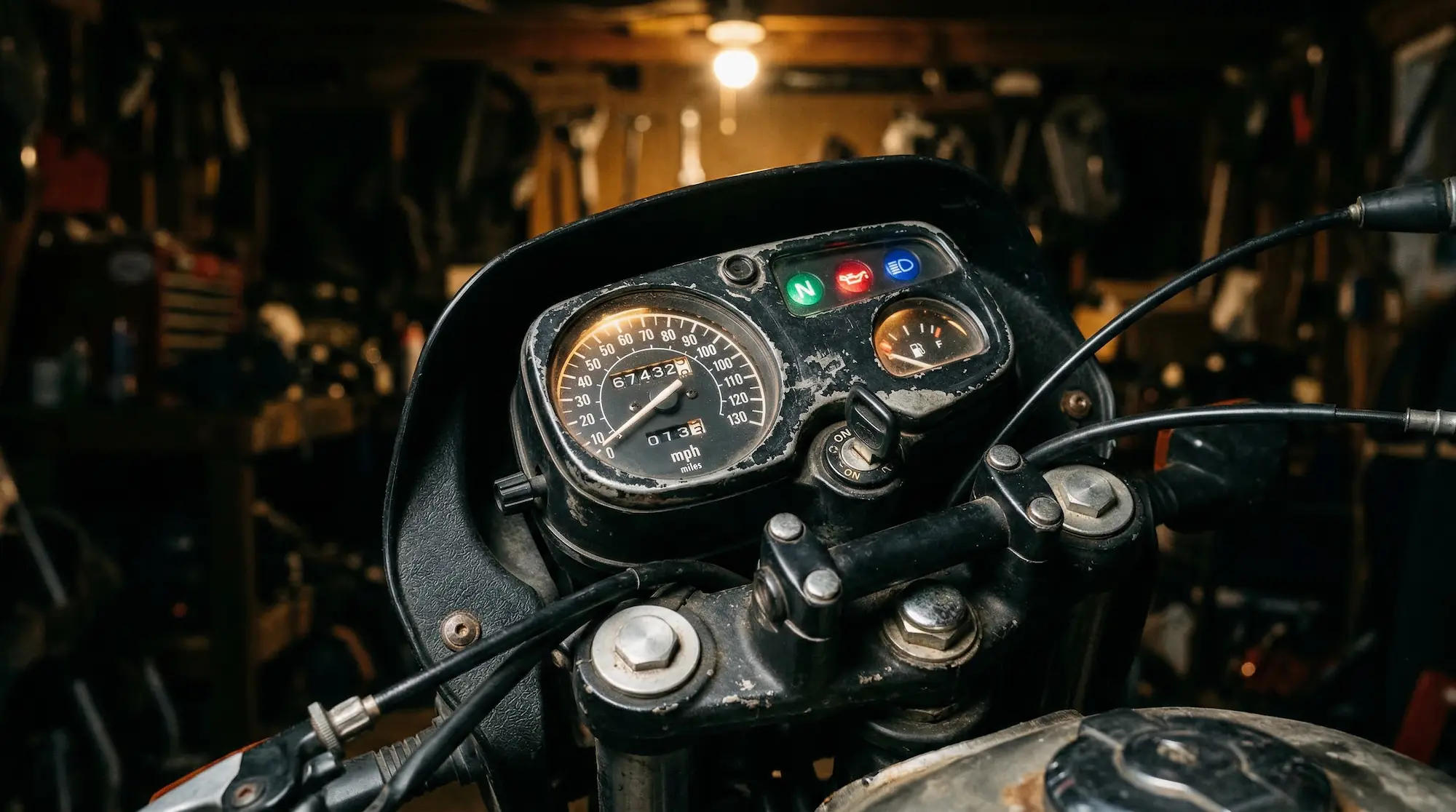
You are scrolling through the classifieds, you spot a great deal on a used bike with 45,000 miles, and you immediately ask yourself: exactly what is a lot of miles for a motorcycle? The honest answer is that it depends completely on the type of machine you are looking at. While 45,000 miles on a high-revving sport bike is considered high mileage, that exact same number on a highway touring motorcycle means it is practically just broken in.
Generally speaking, the high mileage threshold starts around 25,000–30,000 miles for sport bikes, 40,000–60,000 miles for cruisers, and 50,000 to over 100,000 miles for touring bikes. However, there is a golden rule in the riding community: maintenance matters far more than the number on the odometer. A motorcycle with 70,000 miles and a meticulous, fully documented service history is almost always a better, safer buy than a bike with 20,000 miles and zero maintenance records. This guide breaks down motorcycle mileage by type, explains the factors that actually matter, and provides a comprehensive inspection checklist so you can buy with confidence.
Table of Contents
- High Mileage Thresholds by Motorcycle Type
- Average Annual Motorcycle Mileage in the US
- Mileage Is Just One Number — What Really Matters
- Used Motorcycle Inspection Checklist
- Is a High-Mileage Motorcycle Worth Buying?
- Frequently Asked Questions
What Is Considered High Mileage for a Motorcycle? By Type
The type of motorcycle is the very first filter to apply when evaluating the odometer. Motorcycle engines are engineered differently based on their intended purpose. Sport bike engines are built for peak performance, operating at high RPMs that accumulate engine wear faster. Touring engines are large-displacement powerplants tuned to cruise at low-to-mid RPMs on the highway, experiencing a fraction of the mechanical stress per mile.
| Motorcycle Type | “High Mileage” Threshold | Potential Lifespan (Well-Maintained) |
|---|---|---|
| Sport / Supersport | 20,000–30,000 mi | 40,000–60,000 mi |
| Naked / Standard | 30,000–40,000 mi | 60,000–80,000 mi |
| Cruiser | 40,000–60,000 mi | 80,000–150,000 mi |
| Touring | 50,000–100,000 mi | 100,000–200,000+ mi |
| ADV / Dual-Sport | 40,000–60,000 mi | 70,000–120,000 mi |
| Dirt Bike / Off-Road | 10,000–20,000 mi | 20,000–40,000 mi |
Sport bikes have the lowest threshold for a combination of reasons: high operating RPMs, a statistically higher likelihood of being ridden aggressively or taken to track days, and faster wear on consumables like tires, chains, and brake pads. On the other end of the spectrum, touring bikes are built for the long haul. Highway miles are gentle on an engine compared to stop-and-go city traffic, and the demographic buying $25,000 touring rigs typically maintains strict service intervals. It is not uncommon to see a Honda Gold Wing, BMW R 1250 RT, or Harley-Davidson Ultra Classic with well over 200,000 documented miles still running smoothly. For a deep dive into what mechanical components actually wear out and when, see our guide on how long motorcycles last.
Average Annual Motorcycle Mileage in the US
To evaluate whether a bike has been ridden hard or barely touched, you need a baseline. The average motorcycle rider in the United States puts on approximately 3,000 miles per year — significantly lower than the 12,000–15,000 miles a typical car accumulates annually.
Use this 3,000-mile average as a rapid benchmark when evaluating a used listing:
- 5-year-old bike with 15,000 miles: Exactly average. Regular, seasonal use.
- 5-year-old bike with 30,000 miles: Double the national average. Not inherently bad, but the service history needs to have kept pace with the mileage.
- 10-year-old bike with 8,000 miles: Exceptionally low usage. Sounds great on paper, but low mileage combined with long periods of inactivity raises specific concerns — stagnant oil degrades, rubber seals dry out, and internal oxidation can occur in fuel and cooling systems.
Quick calculation: Subtract the model year from the current year and divide the odometer reading by that number. If the result exceeds 8,000 miles per year — especially on a sport bike — that machine deserves a highly critical inspection.
Mileage Is Just One Number — What Really Matters
When you ask what is a lot of miles for a motorcycle, you are assuming the odometer tells the whole story. It does not. The most important principle any experienced rider or mechanic will give you: maintenance history matters infinitely more than the odometer reading.
A Harley-Davidson touring bike with 80,000 miles and a binder full of receipts for every oil change, valve clearance check, and fluid flush is a vastly superior purchase to the exact same model with 30,000 miles and no record of ever seeing fresh oil. Engines are designed to move. Prolonged disuse damages gaskets, rots tires, and clogs fuel systems. An engine that sat untouched for three years often harbors more expensive problems than an engine that just cruised 50,000 gentle highway miles. Proper preparation before long storage periods matters enormously — our motorcycle winterization guide details exactly what maintenance steps protect a bike during extended inactivity and what goes wrong when they are skipped.
Here are the five factors that actually determine the condition of a used bike, in order of importance:
- Verifiable Maintenance History: Do not take the seller’s word for it. Physical receipts, dealer service invoices, or a meticulously kept personal logbook are what you need.
- Type of Use: Highway commuting puts significantly less stress on the transmission, clutch, and brakes compared to aggressive city riding or track days.
- Storage Conditions: A bike kept in a climate-controlled garage and properly winterized on a battery tender will outlast a bike parked outside under a tarp exposed to UV rays and temperature cycling.
- Number of Previous Owners: Fewer owners generally means a more traceable, consistent maintenance history. A bike that has changed hands five times in three years is a red flag.
- Specific Make and Model: Research the exact bike you are evaluating on dedicated owner forums. Some models have known issues — cam chain tensioner failures, stator burnouts, coolant seal degradation — at predictable mileage intervals. Knowing what to look for is half the battle.
Used Motorcycle Inspection Checklist for High-Mileage Bikes
Spending 15–20 minutes doing a thorough walkthrough before buying can save you from an expensive mistake.
⚠️ Critical rule: Always insist on a cold start. Do not let the seller warm the bike up before you arrive. A warm engine masks starting issues, weak batteries, and poor idle tuning. A cold start reveals the truth.
Engine and Transmission
- ☐ Does it cold start easily without excessive cranking?
- ☐ Does the engine hold a steady idle after 2 minutes of warming up?
- ☐ Is the oil in the sight glass clean (amber/brown, not thick black) and at the correct level?
- ☐ Is the exhaust free of blue smoke? (Blue smoke = burning oil, a sign of internal engine wear.)
- ☐ Is the exhaust free of persistent sweet-smelling white smoke? (This can indicate coolant entering the combustion chamber via a failing head gasket.)
- ☐ Does the transmission click into all gears smoothly on a test ride without jumping or severe resistance?
Chain and Drivetrain (if applicable)
- ☐ Is the chain slack within the manufacturer’s specified range (typically 25–35mm for most street bikes)?
- ☐ Is the chain free of rust, kinked links, or severe lateral play?
- ☐ Are the teeth on both front and rear sprockets evenly shaped rather than hooked like “shark teeth”?
If any of the above chain items fail, budget immediately for a full chain-and-sprocket replacement before purchase — a worn drivetrain is a safety issue, not just a maintenance item. Our guide to motorcycle chain adjustment covers the correct slack spec measurement process and explains the warning signs of a chain that is past its service limit.
Brakes
- ☐ Do the brake pads have more than 2mm of friction material remaining?
- ☐ Are the brake rotors smooth, without deep grooving, scoring, or visible warping?
- ☐ Is the brake fluid a clear, light yellow color and filled to the proper line? Dark brown fluid indicates the fluid is overdue for a flush and has absorbed moisture, which raises its boiling point and reduces braking effectiveness under hard use. For full brake system evaluation, see our guide on how to bleed motorcycle brakes.
Electronics
- ☐ Do all lights function correctly (headlight high/low, taillight, brake lights from both levers, turn signals)?
- ☐ Is the dashboard completely free of warning or check-engine lights after starting?
- ☐ Does the battery crank the starter motor vigorously without hesitation?
Chassis and Suspension
- ☐ Are the fairings, engine covers, bar ends, and levers free of deep gouges or scrapes indicating a drop or crash?
- ☐ Are the front fork tubes completely dry, with no oil seeping past the dust seals?
- ☐ Is the rear shock free of oil leaks?
- ☐ Turn the handlebars lock-to-lock; do the steering head bearings move smoothly without catching, clicking, or grinding?
Tires
- ☐ Is tread depth sitting clearly above the legal wear indicator bars (TWI)?
- ☐ Are the tire sidewalls free of dry-rot cracks (common on bikes that sat outside for extended periods)?
- ☐ Is the tire wear relatively even? A flat spot in the center indicates highway commuting, which is acceptable. Severe cupping or irregular edge wear suggests suspension or tire pressure neglect.
Is a High-Mileage Motorcycle Worth Buying?
The direct answer is yes — provided the bike passes the inspection checklist and the asking price accurately reflects the mileage.
There are real advantages to buying a high-mileage motorcycle. The most obvious is the purchase price: a sport bike with 40,000 miles might cost literally half of what the same model with 5,000 miles commands. The steepest depreciation curve has already been absorbed by previous owners, so you are not losing thousands of dollars in value the moment you ride it home. A seller with meticulous records also gives you a clear picture of exactly which components have been serviced and when.
However, walk away unconditionally if any of the following apply:
- The seller cannot provide any documented maintenance history.
- The bike fails multiple critical points on the inspection checklist (leaking forks, worn sprockets, blue exhaust smoke).
- The seller refuses to let you do a cold-start test and has the bike pre-warmed when you arrive.
- The asking price reflects low-mileage market values despite obvious wear and tear.
Frequently Asked Questions
What is considered high mileage for a motorcycle?
It depends on the category. For sport bikes, high mileage begins around 20,000–30,000 miles. For naked or standard bikes, it starts at 30,000–40,000 miles. Cruisers hit high mileage between 40,000 and 60,000 miles. Dedicated touring motorcycles are not considered high mileage until 50,000–100,000 miles, and well-maintained examples regularly exceed 200,000 miles. The absolute number matters far less than the maintenance history and how the bike was ridden.
How many miles per year does the average motorcycle rider put on?
About 3,000 miles per year in the US — significantly less than the 12,000–15,000 miles an average car accumulates annually. A 10-year-old motorcycle with 30,000 miles is right at the national average; one with 60,000 miles was ridden approximately twice as much as typical.
Is it bad to buy a high-mileage motorcycle?
Not necessarily. A motorcycle with high mileage and a comprehensive, documented service history is often a better purchase than a low-mileage bike with zero records. The most dangerous mile on a used motorcycle is not the last one ridden — it is the first mile after a bike has sat unattended in a shed for three years without proper storage maintenance. Use a physical inspection checklist to evaluate true mechanical condition rather than relying on the odometer alone.
Can a motorcycle last 100,000 miles?
Absolutely. Premium touring motorcycles like the Honda Gold Wing, BMW R 1250 RT, and Harley-Davidson Ultra Classic routinely pass the 100,000-mile mark with proper maintenance. Even cruisers and standard street bikes can reach this milestone if cared for meticulously. The key factors are adherence to manufacturer service intervals, consistent oil changes, regular valve clearance checks, and drivetrain maintenance.
What should I look for when buying a high-mileage motorcycle?
Focus on five areas: (1) verify the bike starts easily from cold, (2) confirm the exhaust does not produce blue smoke, (3) test-ride to confirm the transmission shifts cleanly through all gears, (4) check brake pad thickness and rotor condition, and (5) demand to see documented service receipts. The full inspection process is covered in the checklist section of this guide.
When shopping the used market, asking “what is a lot of miles for a motorcycle?” is the wrong question. The right question is: “has this motorcycle been properly maintained?” A touring rig with 120,000 miles and a full folder of dealer service records will provide years of reliable riding. A sport bike with 18,000 miles that has never had an oil change is a ticking time bomb. Use the mileage charts to set expectations, but let the physical inspection and maintenance documentation drive the final decision.