
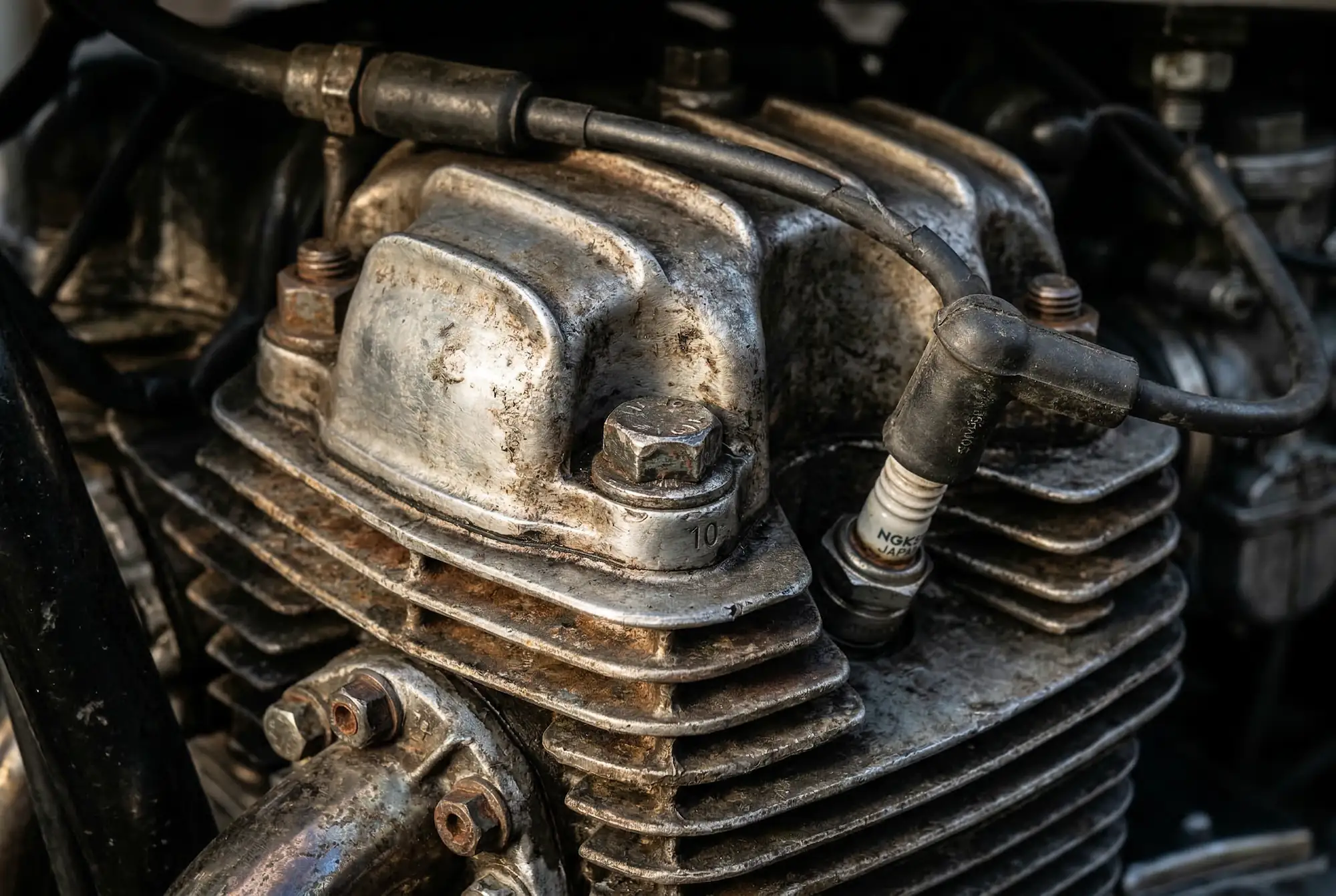
If I had a dollar for every time a new rider asked me, “how long do motorcycles last?”, I could buy a brand-new showroom floor model. The short answer: a well-maintained motorcycle can easily last 50,000 to 200,000+ miles — or survive 20+ years on the road. But as any experienced mechanic will tell you, the long answer is far more complicated.
A motorcycle’s lifespan depends heavily on the type of motorcycle, how aggressively it’s ridden, how religiously it’s maintained, and what you actually mean by the word “last.” A motorcycle doesn’t just spontaneously die one day. It’s a collection of mechanical systems, and components wear out over time. The good news? Almost all of them can be replaced. An engine that has been meticulously maintained with timely oil changes and precise valve adjustments can outlast the chassis it sits in. Conversely, a neglected engine can seize at 30,000 miles, turning a beautiful bike into an expensive paperweight.
If you are wondering how many miles can a motorcycle last, you need context. This guide breaks down realistic motorcycle life expectancy by type, by brand, and by individual component. We also settle the “mileage vs. age” debate, and show you exactly what you can do in your own garage to push your bike’s odometer well past the average.
Table of Contents
- Average Motorcycle Lifespan by Type
- What “High Mileage” Means
- What Actually Wears Out? Longevity by Component
- Mileage vs. Age — Which Matters More?
- Brand Longevity — Who Builds Them to Last?
- How to Make Your Motorcycle Last Longer
- Frequently Asked Questions
Average Motorcycle Lifespan by Type
Not all bikes are built for the same purpose. A high-revving track weapon is built for explosive power, not cross-country longevity. A 900-pound touring machine is engineered to cross continents without breaking a sweat. Here is how motorcycle lifespan breaks down by category.
| Motorcycle Type | Average Lifespan | Well-Maintained Ceiling | What Limits It |
|---|---|---|---|
| Touring (Gold Wing, Road Glide, K1600) | 100,000–200,000+ miles | 300,000+ miles | Very little — built for longevity. Engine, frame, and drivetrain designed for decades of low-stress highway use. |
| Cruiser (Sportster, V-Star, Vulcan, Scout) | 50,000–100,000 miles | 150,000–200,000+ miles | Air-cooled engines run hotter, stressing gaskets over time. Liquid-cooled variants last significantly longer. |
| Standard / Naked (MT-07, Z650, SV650) | 50,000–80,000 miles | 100,000+ miles | Extremely reliable if maintained. Usually limited by rider neglect or the desire to upgrade. |
| Sport / Supersport (R1, CBR, ZX, Panigale) | 25,000–50,000 miles | 80,000+ miles | High-revving engines, aggressive riding, track use. Internals wear much faster when constantly pushed to redline. |
| ADV / Dual-Sport (GS, Tenere, Africa Twin) | 60,000–100,000 miles | 150,000+ miles | Heavy off-road use wears suspension, bearings, and chassis components faster than pure road use. |
| Dirt / Motocross (CRF, KX, YZ) | 10,000–30,000 miles (or by engine hours) | Varies wildly | Competition bikes measured in hours, not miles. Top-end rebuilds are standard every 50–100 hours. |
| Scooter (PCX, Vespa, Burgman) | 20,000–50,000 miles | 80,000+ miles | Small engines work hard at wide-open throttle. CVT wears. Harsh stop-and-go commuter use accelerates wear. |
Mechanic’s Note: These ranges assume AVERAGE maintenance. Well-maintained bikes routinely exceed the upper ceilings. Neglected bikes fail catastrophically well below the lower range. Your right hand and your wrench determine where your bike falls on this spectrum.

What “High Mileage” Means — It Depends on the Type
Context matters enormously when evaluating the odometer on a used bike. A high mileage motorcycle is a completely relative term. 50,000 miles on a 600cc supersport means it has lived a long, hard life. 50,000 miles on an 1800cc touring bike means the original owner finally finished breaking it in.
| Mileage | Sportbike | Cruiser | Touring |
|---|---|---|---|
| 15,000 | Moderate | Low | Very low |
| 30,000 | High | Moderate | Low |
| 50,000 | Very high | Moderate–high | Moderate |
| 80,000 | Exceptional | High | Still going strong |
| 100,000+ | Rare, usually rebuilt | High but common | Normal for well-maintained |
If you are looking at a 2018 Honda Gold Wing with 80,000 miles and full service records, that is a solid, confident buy. A 2018 Yamaha R1 with 80,000 miles? Walk away — or budget for major internal engine work.
What Actually Wears Out? — Longevity by Component
A motorcycle doesn’t die all at once. Here is a breakdown of what actually wears out, organized roughly by chronological lifespan.
Consumables (Replace Regularly)
- Tires: Every 5,000–15,000 miles depending on compound and riding style. Understanding your tubed vs. tubeless tire setup also affects how you handle aging rubber and flats on long trips.
- Chain and sprockets: Every 15,000–25,000 miles. A poorly lubricated chain fails in half that time. Our complete motorcycle chain cleaning and lubing guide covers every step, and keeping your chain tension correctly adjusted prevents premature sprocket wear.
- Brake pads: Every 10,000–20,000 miles. City commuters burn through pads far faster than highway cruisers.
- Oil and filters: Every 3,000–6,000 miles (or annually at minimum). The absolute lifeblood of your engine. Never negotiate this interval.
- Air filter: Every 10,000–15,000 miles street; after every ride on dirt. A clogged filter starves your engine. Our motorcycle air filter cleaning guide covers foam, paper, and cotton gauze types.
- Coolant: Many modern OEM long-life coolants (Honda Pro, BMW, Yamaha) are rated for 3 years or 30,000 miles at first change, then every 2 years after. Always verify your owner’s manual — old coolant becomes acidic and eats water pump seals from the inside out.
- Brake fluid: Every 2 years without exception. DOT fluid is hygroscopic — it absorbs moisture, lowering boiling point and accelerating caliper piston corrosion. Our motorcycle brake bleeding guide walks through the full process.
- Spark plugs: Every 8,000–16,000 miles for standard copper, or 20,000+ miles for premium iridium plugs.
Wear Items (Replace Periodically)
- Battery: Every 3–5 years for lead-acid AGM, or 5–8 years for lithium (LiFePO4) kept on a smart tender during the off-season.
- Suspension: Fork seals dry out every 20,000–30,000 miles. A full rebuild (oil, springs, revalving) should happen every 30,000–50,000 miles on bikes ridden hard.
- Wheel bearings: Every 20,000–40,000 miles. A failed wheel bearing at 70 mph is potentially lethal. Inspect annually in wet or salty climates.
- Clutch: Every 20,000–60,000 miles — almost entirely determined by how smooth your left hand is. Deliberate shifting extends clutch life exponentially.
- Valve adjustment: This varies significantly by engine — always consult your specific owner’s manual. General ranges: 8,000–16,000 miles for high-performance 4-cylinder sportbikes (Honda CBR600RR specifies every 8,000 miles; Yamaha R6 every ~10,600 miles); 16,000–26,000 miles for most modern touring and naked engines. Tight exhaust valves that go unchecked will burn, causing catastrophic compression loss and a full top-end rebuild. This is the single most neglected critical maintenance item on used bikes.
Long-Life Components (Last the Life of the Bike if Maintained)
- Engine: With proper oil changes, diligent valve adjustments, and regular coolant service, 100,000+ miles is achievable on most multi-cylinder engines. Some Honda, Yamaha, and BMW engines run past 200,000 miles without ever having the cases split.
- Frame: Essentially permanent unless crashed or severely corroded by road salt. Frames do not wear out from mileage alone.
- Transmission: Generally lasts the life of the engine. Gear dogs can round off with years of aggressive clutchless shifting, but this requires massive abuse to manifest.
- Final drive (shaft): Nearly maintenance-free but not zero-maintenance. Service intervals vary: BMW specifies final drive oil changes every 6,000–10,000 miles; Yamaha’s FJR1300 specifies every 12,000 miles. Always follow your manufacturer’s specific interval — not a generic estimate. For a full comparison of chain, belt, and shaft systems, see our chain vs. belt vs. shaft drive guide.
What Kills Bikes Prematurely
- Neglected oil changes: Oil shears down, loses its protective film, bearings grind, engine seizure follows.
- Never adjusting valves: Exhaust valves recede into the head. When clearance hits zero, the valve stays slightly open during combustion and burns — requiring a full, expensive top-end rebuild.
- Ignoring the charging system: A corroded ground wire forces the stator to work overtime, frying the regulator/rectifier unit. Understanding what a motorcycle stator does and spotting early failure symptoms can save you from a $400+ repair bill and a roadside breakdown.
- Crash damage: A tweaked frame or bent forks are impossible to repair safely and typically total a bike from an insurance standpoint.
- Sitting unused for years: Dried rubber seals, corroded brake pistons, and degraded ethanol fuel turning to sticky varnish — destroying carburetors and fuel injectors. Our rusty motorcycle gas tank cleaning guide is your first stop when reviving a dormant bike. If it is carbureted, you will also need our carburetor cleaning guide before the engine will run cleanly again.
Mileage vs. Age — Which Matters More?
This is the number one question for used motorcycle buyers. Should you buy the 15-year-old bike with 5,000 miles, or the 5-year-old bike with 50,000 miles?
Low Mileage + Old (e.g., 5,000 miles, 15 years old)
To an experienced mechanic, this is a walking red flag. A motorcycle is engineered to move. When it sits, bad things happen systematically: dried rubber seals that leak the moment you introduce oil pressure; tires that are dry-rotted and unsafe at any speed regardless of tread depth; degraded brake lines; fuel turned to varnish; a dead battery; and acidified coolant. A bike that sat for a decade needs $500–$1,500 in parts before it is reliably rideable again.
High Mileage + Recent (e.g., 50,000 miles, 5 years old)
If maintenance records exist, this is often the better, safer buy. Everything on this bike has been actively circulating. The oil has continuously coated internal bearings. The coolant has prevented rust in the water jackets. Rubber stays supple when heated, cooled, and flexed regularly. Audit specific wear items — chain, tires, suspension, and valve history — but the core of the bike is alive and proven.
The Golden Rule of Used Motorcycle Buying: Maintenance history > mileage > age. A well-documented 60,000-mile bike will almost always outperform a mystery 15,000-mile bike that sat in a shed since 2012.

Brand Longevity — Who Builds Them to Last?
Not all manufacturers build with the same engineering philosophy. Japanese brands are famous for over-engineering bearing surfaces with conservative, stress-tested tolerances. Some European brands prioritize peak performance and expect strict adherence to demanding maintenance schedules.
| Brand | Known For | Typical High-Mileage Range | Notable Examples |
|---|---|---|---|
| Honda | Bulletproof reliability, over-engineered mechanics. | 100,000–300,000+ miles | Gold Wings regularly exceed 200,000 miles. CB series engines run indefinitely with basic maintenance. |
| Yamaha | Strong reliability, broad range of durable engines. | 80,000–150,000+ miles | FJR1300 and Super Tenere are legendary for zero-drama high-mileage touring. |
| Kawasaki | Durable sport and touring engines, robust transmissions. | 60,000–120,000+ miles | Concours 14 / 1400GTR enormously popular for iron-butt long-distance touring. |
| Suzuki | Reliable, affordable, proven engineering. | 60,000–100,000+ miles | V-Strom 650 (DL650) widely regarded as the ultimate unkillable daily commuter. |
| Harley-Davidson | Simple, torquey V-twins operating at low RPM stress. | 100,000–200,000+ miles | Milwaukee-Eight and Twin Cam engines highly durable when oil changes are kept current. |
| BMW | Over-engineered components, long factory service intervals. | 100,000–200,000+ miles | Boxer engines (R1250GS, R1250RT) legendarily long-lived, with documented examples exceeding 300,000 miles. |
| Ducati | Performance-focused, requires strict maintenance adherence. | 40,000–80,000 miles between major overhauls | Desmodromic valves require precise biannual adjustment regardless of mileage. Critical note: Older L-twin models (Monster, Multistrada 1200 and earlier) use rubber cam belts requiring replacement every 7,500–12,000 miles or every 2 years. Current V4 models (Panigale V4, Multistrada V4, Streetfighter V4) use a timing chain — no belt replacement needed. Always verify which engine family you are buying before making maintenance cost assumptions. |
| KTM | High-performance focused, reliability improving each generation. | 40,000–80,000+ miles | Adventure models increasingly competitive for long-distance reliability, though historically more demanding than Japanese equivalents. |
Note: These are generalizations across model lines and production generations. A neglected Honda will die much faster than a meticulously maintained Ducati.
How to Make Your Motorcycle Last Longer
- Follow the owner’s manual service schedule — and know your engine’s valve interval. For high-performance 4-cylinder sportbikes, valve inspection can be required as early as every 8,000 miles. Never skip or delay.
- Use quality oil and OEM-spec filters: Cheap oil shears down faster. Use the exact viscosity and type specified by the manufacturer. Oil is cheap. Engines are not.
- Ride it regularly: Aim for at least a 20–30 minute ride weekly to bring the engine to full operating temperature, which burns off internal condensation and prevents moisture buildup in the oil.
- Warm up correctly — do not idle endlessly: Start the engine and allow 15–20 seconds for oil pressure to fully circulate. Then ride away gently under light load. This warms the engine far more efficiently than extended stationary idling. Extended idling on liquid-cooled engines can cause condensation in the oil before the thermostat opens. Avoid aggressive throttle until the temperature gauge stabilizes.
- Store properly during the off-season: Use a smart battery tender. Fill the tank to the brim to prevent condensation rust and add fuel stabilizer. Elevate tires off the ground to prevent flat-spotting. If carbureted, drain the float bowls completely.
- Wash and protect the drivetrain: Remove road salt and acidic bug residue regularly. Lubricate the chain every 300–500 miles. A clean bike is a bike where you spot a new oil seep instantly — before it becomes a seized engine on the highway.
- Fix small problems the day you notice them: A minor oil weep today becomes a seized engine next month. The cost of ignoring small mechanical and electrical problems compounds exponentially.
Frequently Asked Questions
How many miles can a motorcycle last?
A well-maintained motorcycle can last 50,000–200,000+ miles depending on type and maintenance. Touring bikes and cruisers regularly exceed 100,000 miles. Sportbikes typically reach 25,000–50,000 miles due to high-revving engines and aggressive use. With meticulous maintenance, many bikes reach 200,000+ miles without a complete engine rebuild.
Is 50,000 miles a lot for a motorcycle?
It depends entirely on the type. For a 600cc sportbike, yes — 50,000 miles is very high. For a touring bike or large cruiser, it is considered moderate. For a Honda Gold Wing, 50,000 miles means it is barely broken in. Always evaluate the type, maintenance history, and physical condition — never the odometer alone.
Is mileage or age more important when buying a used motorcycle?
Neither — maintenance history matters most. A 10-year-old bike with 60,000 miles and full service records is typically a far better buy than one with 10,000 miles and no documentation. Low-mileage bikes that sat for years often have dry rot, varnished fuel systems, acidified coolant, and corroded brake lines requiring expensive recommissioning.
How long does a motorcycle engine last?
With proper maintenance — consistent oil changes, valve adjustments on your engine’s specific schedule, and fresh coolant service — most modern motorcycle engines last 80,000–100,000+ miles. Honda and BMW touring engines routinely exceed 200,000 miles. High-performance sportbike engines may need top-end work at 40,000–60,000 miles due to dramatically higher operating stresses.
Do motorcycles last as long as cars?
Generally, no — though the gap is narrowing for premium touring bikes. Cars routinely reach 200,000+ miles as a standard outcome, while most mid-size motorcycles peak at 100,000–200,000 miles. However, premium touring motorcycles (Honda Gold Wing, BMW R1250GS, BMW R1250RT) can match or exceed car longevity. The difference stems from higher operating RPMs, constant elemental exposure, and variable maintenance compliance.
What is the most reliable motorcycle brand for longevity?
Honda consistently ranks highest for sheer longevity, with Gold Wings and CB series engines regularly documented at 200,000–300,000+ miles. Yamaha and BMW follow closely for touring and adventure models. The honest answer is that maintenance quality beats brand origin — a properly maintained Kawasaki will outlast a neglected Honda every time.
How long a motorcycle lasts depends far more on your maintenance habits than on the mileage, the brand, or the year. A $5,000 Honda standard bike with religious oil changes and garage storage will outlast a $25,000 machine that has been neglected and left exposed to the elements. Follow the service schedule — especially valve adjustments, the most overlooked critical item on used bikes. Ride it regularly. Store it properly. Fix small problems before they become catastrophic ones. If you are buying used, demand complete service records. They will tell you the true story far better than the odometer ever will.
Keep your engine breathing at full health — start with our motorcycle air filter cleaning guide.
Electrical problems affecting reliability? Our guide on what a motorcycle stator does explains the charging system and how to diagnose failure before it strands you.
Not sure which drivetrain is best for long-term ownership? See our chain vs. belt vs. shaft drive comparison for a full breakdown.